
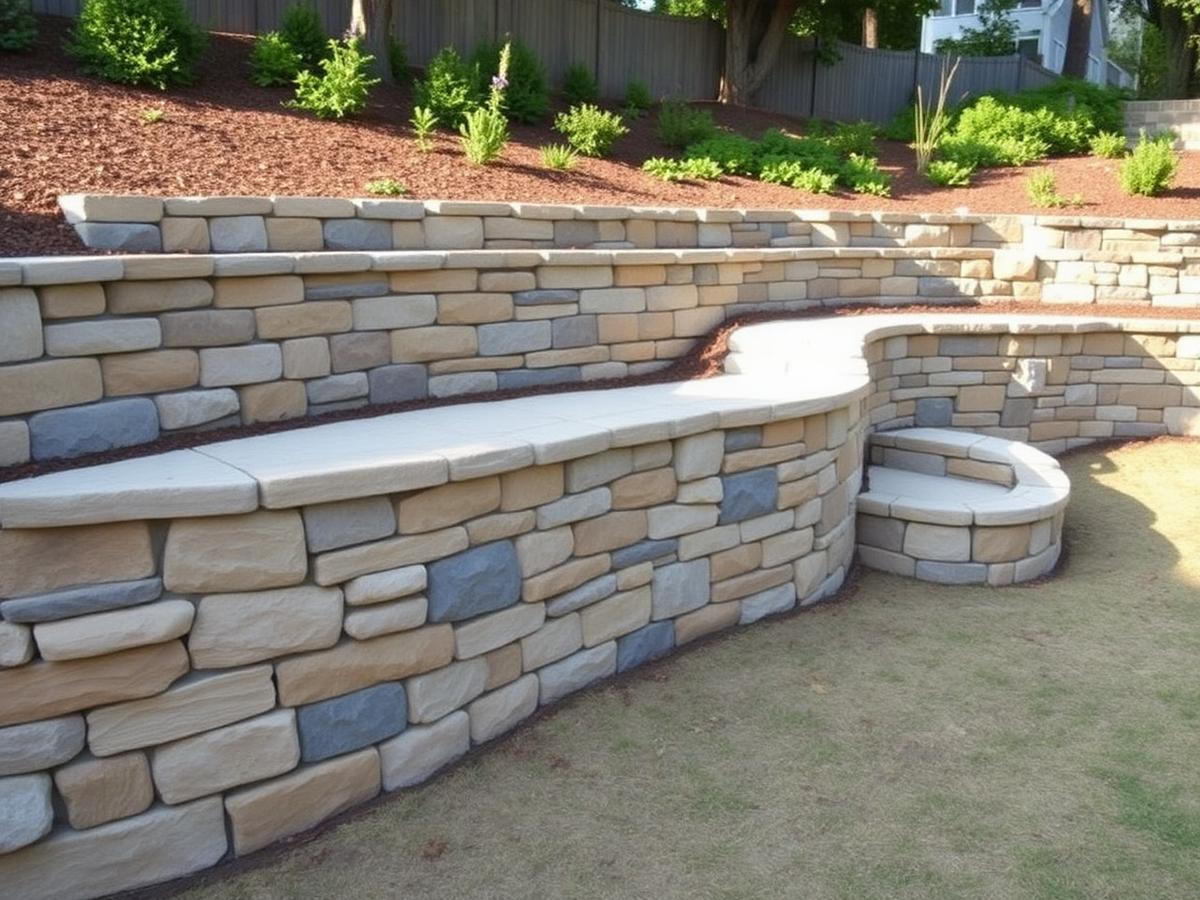
Steps, Sitting & Retaining Walls
Hold the grade, gain the seating
The DMV is full of sloped lots, and a retaining wall is what makes them usable. We build segmental block and natural stone walls with the geogrid reinforcement, drainage stone, and perforated pipe that keep them standing — plus seating walls, pillars, and stone steps that finish the space.
Why homeowners choose it
- Terraces a steep yard into flat, usable living space
- Stops erosion and directs water away from your foundation
- Seating walls add permanent capacity without patio furniture
- Geogrid reinforcement and drainage on every wall that needs it
Materials we work with
- Segmental retaining wall block with cap units
- Natural stacked stone and boulder walls
- Bluestone and granite step treads
- Lighted caps and column accents
What drives the price
Walls price by face square footage, height, block or stone type, excavation, and how much drainage the site needs. Walls above roughly four feet typically need engineered drawings and a permit — we'll flag that at the estimate.
FAQ
Walls & Steps questions
Why do retaining walls fail?+
Almost always drainage. Water builds hydrostatic pressure behind the wall and pushes it out. Every wall we build gets clean drainage stone, filter fabric, and an outlet for water to escape.
How tall can a retaining wall be without engineering?+
It varies by jurisdiction, but roughly four feet is the common threshold in Maryland, Northern Virginia, and DC. Above that you'll generally need a stamped design and a permit.
Also offered
Other services
Patio & Walkway Pavers
Outdoor living space you'll actually use
Patio & Walkway Flagstone
Natural stone, laid by hand
Driveway & Permeable Pavers
Curb appeal that carries a truck
Pedestal Pavers
Rooftop decks, terraces, and dead-flat surfaces
Stone Columns, Fire Pits & Stone Circles
The features people gather around
Ready to price your walls & steps project?
We measure, talk materials, and give you a written price with no obligation — anywhere in Maryland, Northern Virginia, or DC.